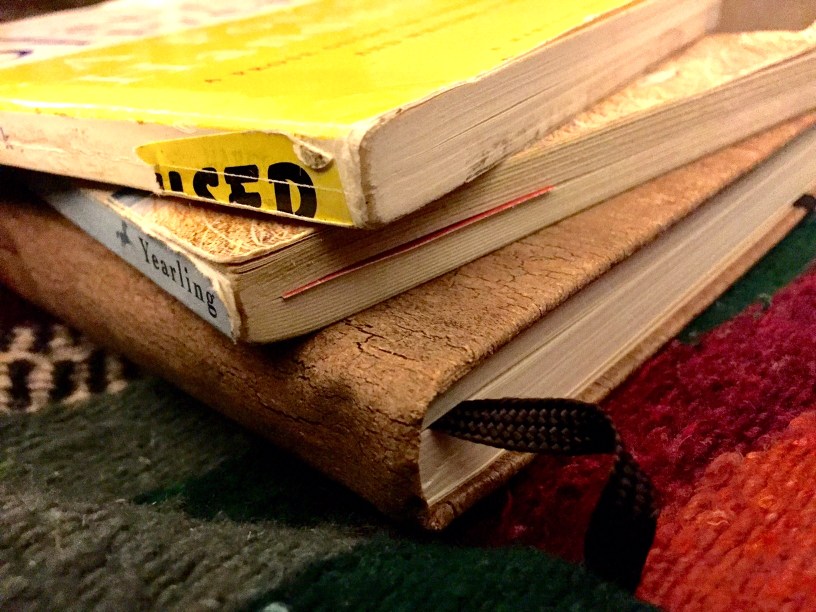
The poet's notebook opened to the blank page.

7 Essential Tips for Young Poets on Finding the Poem


You love poetry. That’s where we all begin – love of a good poem. Now, it’s time to write your own poems. But you hate what you’ve written. Now what?

1. Free Writing

After you’ve picked an interesting starting point for your poem, which can be as simple as the tree in your front yard, start writing. Write the good, write the bad, write what comes into your head. Soon, with practice, you’ll follow the path from something mundane to something interesting. Keep writing. Even after you think you’re done, keep writing. Magic can happen here and often does. It’s a bit of stream of consciousness, it’s a bit of free association, and it’s a bit of triggering the subsconscious. When you do finish, you’re not finished. See tip number seven.

2. Research

Find a topic that interests you and dive into the research. Whales? The violent crime rate? Farming techniques in the middle ages? Take notes. Learn your topic, so that when you do begin writing your poem, you have a feel for what it is you’re exploring. Although I often take copious notes during my research phase, I rarely use all of my research. It’s a jumping off point. It helps me understand the world that I’m writing about. And when I’m writing, I lean in to what I sense is important or interesting or needed in the poem. But doing your research can so often lend a texture to your poetry that you cannot get without it. It’s not essential, but it can make for rich details and bring your audience into a world that they had not yet explored.

3. Observe

So much good poetry centers around intense observation. Whatever it is you’re writing about, strive to really see it, and see it from all angles. Strip away your biases. Open those peepers and take it all in. Empathize. Observe. Write it all down. Then see tip number seven.

4. The Senses

While a poem does not often rest wholly in the physical realm, I believe it must be grounded there. We experience the world through our senses first. Use them. Most good poets are excellent at painting a strong visual image. But you can go beyond that with descriptions of taste, touch, sound and scent. Scent is such a powerful emotional tool. We connect to scent in subconcious ways that can trigger all kinds of feelings. Don’t underestimate the power of all five senses in your poem. That’s not to say you need to hit every sense in every poem, but only that you should be aware of your full arsenal of language and connection.

5. Metaphor

Oh the metaphor, sweet, sweet metaphor. Don’t let your poems idle in neutral with a single image. Complicate the idea in your poem, explore it, expand it with metaphor. Consider extending your metaphor across the whole poem, or use multiple metaphors to bring out your image/idea and make it feel more connected to the world at large.

6. Get Weird

Please don’t be normal. Writers with normal sensibilities should write essays or stories. (I kid! Sort of.) But in all seriousness, when you are writing poetry, let your mind and imagination take you to weird places. Make strange, and almost non-sensical, connections. You won’t keep every weird tangeant in your poem. But fortunately, it can all be made wonderful with tip number seven.

7. Edit

Once you’ve let your pen run rampant across the page, let it mellow for a day then return. What feels interesting, moving, powerful? As the poet, you get to establish your own criteria for what you think is important. But do have a yardstick. And then start shaping that poem. Yes, we’re cutting words out. But we’re also looking for opportunities to reshape and add to the poem as well. This is not to say that there are no great poems that come out fully baked and ready for publishing. But so much of the best poetry out there has been edited and re-edited. Editing allows us to take the fresh eyes of a new day and hone our poem until it shines. Mary Oliver once said, “In my own work, I usually revise through forty or fifty drafts of a poem before I begin to feel content with it.” Ama Codje writes, “Time is the first ingredient of my approach to revision; it allows me to re-see much more clearly than I’m able to immediately after I’ve drafted a poem.”1 And of Anne Sexton, the The New Your Times wrote, “It is instructive to learn, for instance, that at certain periods in her life she revised endlessly, taking a poem through 20 or more drafts, while at other periods she wrote in a kind of white heat, two, three, even four poems a day.”2

As you train your measuring tools for what is good poetry in your writing, you’ll get better and better at knowing when a poem is truly done. Or at least done enough. Walt Whitman famously never stopped editing Leaves of Grass. No pressure.

1https://www.ironhorsereview.com/single-post/7-contemporary-poets-on-revision

2https://www.nytimes.com/1981/10/18/books/the-rise-and-fall-of-a-poet.html
Eschewing Punctuation and Capitalization in Poetry

A poet friend recently asked me why I do not use capital letters or punctuation in my poetry. While I have different reasons for both choices, there are two overarching philosophies that answer to both. Balance and ambiguity.

First, I’ll address the idea of balance, and by balance, I mean giving every word, every line an equal opportunity to affect the experience and meaning of the poem. When we emphasize certain words by capitalization we overshadow the agency of other words. And when we cut up our lines with punctuation, we cut off avenues of meaning.

That brings me to the idea of ambiguity in poetry. While I write with purpose, I also believe it is critical for the poet to open themselves up to the subconscious, to be wholly open to receiving new direction, images and ideas. One of the things poetry does better than any other art form is to connect ideas usually not connected. We open ourselves up to possibility. By letting a poem breathe and flow with little to no punctuation, and without capitalization, we increase the chances that those connections will occur.

I assure you, I still believe in pauses. Just as we pause in our natural speech, which is often controlled by the breath, or “breath-stops” as Alan Ginsberg called them, the rhythm that poetry craves demands we pause. For me, this is most often the end of a line. Every so often, I will add a simple punctuation mark in the middle of a line if I feel that meaning will dissolve without it. But generally, I try to avoid this. I also find that we can have pauses in the middle of a line simply because of the natural flow of speech, without need for a signifying punctuation mark.

A common poetic practice, a traditional one, is to capitalize the first letter of a line. I see no absolutely no reason for this, and in fact, find it quite distracting. Why would that word have more emphasis than another? And it most certainly fights against enjambment. Should those two words be together? The capital in between them argues, “Certainly not!”

Writing poetry is not like writing prose, of course. And part of that difference, I think, is trying to find ways to weave multiple meanings through the work that could not exist as easily with the blockages that capital letters and punctuation set up.

A poem is a breathing creature which can create meaning from the subconscious of both its author and its reader. A poem reaches its fullest potential in that moment when the experiences and perspectives of its author meet those of the reader. It’s best to not get in the way of the poem’s need to connect itself in surprising ways.

How Quiet Drives Good Poetry

Last night, after I thought everyone had gone to bed, I was working on editing a poem’s title, which I knew was simply not right. It was too simplistic, explicit and redundant with the poem’s text. I had jotted down a few ideas and was in the middle of this process when my son walked in and started talking about a tennis racket he was researching. And you guessed it, whatever breakthrough I was about to make on that title was gone.

Writing poetry begs for a deep quiet. This is a quiet that pertains to the mind more than the sounds around us, although silences help. Poetry is deep observation and contemplation and rumination, and letting disparate ideas blunder about the quiet spaces to see how they interact.

William Stafford in an interview with David Elliott in his book of conversations, At Home in the Dark, said, “…for me the experience of finding the way in writing is one of sensitivity, listening, glimpsing, going forward by means of little signals, and those little signals are available in conditions of quiet, lack of turbulence, and conditions that are non-confrontational….I think that one finds one’s way of with a sensibility that requires an attitude other than loudness or aggression.”

Stafford’s extension of this idea to being the antithesis of loudness and aggression certainly resonated with me. Poetry, in the way Stafford means and in the way I most appreciate it, is the opposite of this brash, angry grandstanding of cultish politics.

There is a certain level of sorcery to poetry writing that goes beyond thoughtfulness. There is this idea of being quietly open and receptive to what the world and the words want to say.

Robert Pinsky "The Sounds of Poetry"

A Poetic Exercise in Accentual Verse

I was reading Robert Pinsky’s terrific book The Sounds of Poetry, and I came cross James Wright’s wonderful poem “The First Days.” While Pinksy was concerned in this passage with other matters (predominantly how free verse flirts with iambic pentameter), I became interested in using the poem as an example of accentual verse.

First, I will present an excerpt of this poem to you without comment.

The first thing I saw in the morning

Was a huge golden bee ploughing

His burly right shoulder into the belly

Of a sleek yellow pear

Low on a bough.

Before he could find that sudden black honey

That squirms around in there

Inside the seed, the tree could not bear any more.

The pear fell to the ground,

With the bee still half alive

inside its body.

If we are listening closely, I think one of the things we notice right away are the few dense clusters of closely knit accents, such as “huge golden bee ploughing,” “burly right shoulder” or “sleek yellow pear.” These clusters really serve to slow down the pace of the poem, while providing some aural punch.

In the following version, I’ve bolded each syllable I feel is accented in regular speech. Note, I haven’t accented every syllable you would in the sing-song patter of iambic verse. I believe this is the way in which the natural voice would really scan these lines. I’ve also written the number of accents I’ve noted at the beginning of each line.

3 The first thing I saw in the morning

4 Was a huge golden bee ploughing

5 His burly right shoulder into the belly

3 Of a sleek yellow pear

2 Low on a bough.

5 Before he could find that sudden black honey

3 That squirms around in there

5 Inside the seed, the tree could not bear any more.

3 The pear fell to the ground,

4 With the bee still half alive

2 inside its body.

You can see that the lines pulse between the long and short number of accents. And hopefully, you can also detect how the poem speeds up and slows down as the accents are more or less densely packed. “Was a huge golden bee ploughing” has a very different pace and feel than “Before he could find that sudden black honey.” The accent I’ve put on “to” in the third line is arguable, but that’s how I hear it. You’ll also notice how I have not accented certain words that might be normally accented in an accentual-syllabic reading, such as “first” in the first line or “could” in the sixth line. But to me, that’s the power of free verse; natural language and the context of the words most inform their stress.

Constrict to Expand: Tips for Young Poetry Writers

When writing poetry, ultimately we are strive to provide something of value, something of interest, something that causes the mind to work in new ways and open up the world (whether the internal one or its external counterpart). I’ve increasingly found that setting parameters on your prosody can bring about that new angle, that happy accident, that magic. So writers of poems, I encourage you to discover new ways to shape and constrict your poems.

I think the best thing first is to just get down the first draft, knowing that this is not where you will end up. It’s quite easy to self-censor yourself in the beginning so that you often cut off the ideas that have been percolating in your subconscious before they have a chance to form. But after the first draft, it’s time to dive in and mine what’s valuable. At this stage, I like to be rather vicious with my culling. Young writers can often treat everything they write as a sort of sacred cow. It’s here that you should not only be carving away but often adding anew. It can and often should be a messy process.

After we start to see the real flesh of the poem emerge though, consider giving yourself some kind of restriction. See where it leads you. Of course, more traditional ways of doing this are meter and rhyme. The meter you impose should follow the needs of the poem, whether that be syllabic , syllabic-accentual or merely accentual. You could experiment with any of a myriad of traditional forms. Sonnets and haikus seem to be the old standbys. But there’s a whole world of forms to experiment with – from rondeau to sestina, from ghazal to the skinny.

But the restrictions you try need not be so orthodox. Perhaps, you want to place your poem in the voice of a narrator who is somehow distinctly different from you, the author. Perhaps you want to create a particular aural effect by finding words with certain qualities that emphasize your meaning. Or you might experiment with a more visual effect by playing with your line breaks and seeking out meaningful and surprising enjambment or pacing. These are just a few examples. I’m certain that you will discover many more – hopefully some that are particular to you and the poems that only you were meant to write.

That One Thing: Do it With Style, Writer

Last night, as I read Liu Cixin’s The Three-Body Problem and felt myself in the grips of his imaginative world, I was struck by all the different ways writers can grab you in a story. While there are certainly formulas many writer often follow to tell a good story, I think the best thing a writer can do is to write toward his unique strengths. Cixin certainly has a knack for turning hard science fiction into easy-to-follow concepts that are natural extensions of the story, but he’s also created a fascinating world, a world that he reveals masterfully and at a pace that keeps the reader thoroughly engaged.

But I can be equally caught up in the way another writer crafts characters or dialogue, or crafts sensory descriptions, or plots cliffhangers and plot twists. And of course, two different writers can do those things very differently, but both well. For example, my favorite modern author, China Miéville, like Cixin, has a penchant for masterful world-building. But his style of exposition is vastly different from Cixin’s. For one thing, it’s full of delicious adjectives and a laundry list of visual and sensory details. And yet, I’m in love with both of their writing.

I had a fiction writing professor once who said that he could teach us technique but not style. I’ve certainly found that to be true (even though defining style is a bigger task in itself). A writer has to find his or her own style. We borrow ideas and learn from what has come before us, certainly. But at the end of the day, an artist has to explore what makes them an artist. What is it that you have to say that’s different than the next guy? Or how do you present it differently? Find that one thing and do the hell out of it. Be the best at that one thing.

Do You Have Something to Say?

A friend of mine recently asked me a seemingly small question. I was telling her about all of my creative writing projects (my children’s books, novels, short stories and poems), and she asked, in an intrigued tone, “So you feel like you have something to say?”

I could answer that question by rattling off all the philosophical topics I love to chatter about anytime I’m sitting across someone with nothing but coffee between us. And I could easily write a non-fiction book on just those things.

But I don’t think that’s really answering the question (for one thing, I’m not writing that non-fiction book). And I don’t think it’s such a small question after all. Certainly everyone has opinions, and at least a modicum of a unique perspective. Each of us, I believe, has something to share with our fellow humans. But do we feel that something is valuable enough to charge others’ money for it?

Part of the answer lies heavily with how we share our piece. Because that’s the art of it, isn’t it? Are we a good craftsman? Do we weave a compelling tale, or use poetic language?

But also, is our perspective well-informed? Well thought-out? Does it share a perspective sufficiently unique as to provide something new or powerful or educational?

I can only say I hope so. And I suppose that would be the honest answer, in one form or another, of most artists. We create because we are drawn to do it. I write stories and poems, because I’m feel compelled to do so and because I feel immense joy in the process.

But are the works that result things of value? It is the collision of art and audience that starts to answer that question. Even then, we are left with the question: Did the right art find the right audience?

Don’t Get Stuck Reading 100% of the Same Genre

Choice for the modern individual has evolved far from what it once was. Consider that major publishers in the U.S. alone publish about 300,000 books each year. Essentially, whatever your favorite genre of choice, you’ll never run out of good books to read.

And I think that’s dangerous. Books help us escape, certainly. But they also help us grow and better understand the word and the people around us.

Read outside your genre. Discover subjects and ways of thinking that you wouldn’t ordinarily consider. Be open.

Are you primarily a reader of science fiction and fantasy (like me)? Read a biography, or a memoir, or a book on wine tasting.

Here’s my suggestion, for every three books you would normally read, make that fourth book one out of your usual wheelhouse.

Out of the Cave – The Writing Community

For many years now, I have been a solitary writer. Recently, a more focused desire to get published has brought me out of my literary cave in search of other creative writer types, not only with which to network but also with which to compare notes, collaborate, get feedback. For a long time, I hadn’t realized I needed this interaction. I was content to hammer out my texts in the bowels and darkness of my cave, torch light flickering and throwing up the shadows of my fancy along the rough-hewn walls.

Last night, I sought out the fellowship of a writer’s group in Plano. They are a relaxed, diverse group of writers all in various places along their writer journeys. One woman read her short, breathy poems a few poignant images, another read fan fiction, and one older man read a powerful modern fable.

As for myself, I read a few poems, some old and some new. Afterward, we stood around, doling out compliments and discussing our writing.  And I came away utterly refreshed and invigorated. It hadn’t mattered that the writing I read went uncritiqued. I had been a part of something connective, something important.

That night, before I went to bed, a story began in my head. But as I lay in bed, seeking the solace of sleep, the story wrote itself in my head, insisting, insisting. For the next five hours, I tossed in my bed, as this story refused to leave me alone. Specific prose played over and over in my thoughts. Finally, in the wee hours of the morning, I got out of bed, realizing if I didn’t write it down, it wouldn’t leave me alone. And so I did.

Being a writer is not always by choice, but it is often an immensely satisfying calling. And sharing that experience with others, when you’ve spent so many years in the cave, is nothing short of revitalizing.

Three Things I Learned at the DFW Writers Conference

This past weekend I attended the DFW Writers Conference in Dallas, Texas. I’ve been writing and submitting for a long while, but I’ve never been to a full-fledged writing conference. One of my high school friends and a successful author told me writing conferences were the place for aspiring authors to be. So I took her advice, and here are three things I took away from the experience.

Writers Are the Best

I met a lot of fellow authors at the conference, and as always, it was wonderful to talk to folks of my own ilk and compare notes on the craft and life of writing. I could do that all day. But it also got me to thinking about why I like writer folk so much. Because by the very nature of crafting story and character, writers are more empathetic people (generalizing here obviously). We have to get into the heads of our characters and understand motivation, and so we tend to do that with other people too. While many writers are introverts who can appreciate solitude, we’re an understanding lot. And many of us even downright tolerant. I didn’t talk to a single author who was standoffish this weekend, and I met a lot interesting writers I hope to talk to again. And again.

Query Letters Need to Be Phenomenal

I knew this already. But I got to watch this event called the Query Letter Gong Show. Anonymous query letters from real authors at the conference were read on stage. Seven agents listened and would strike a gong when they heard something that would stop them reading the query in ordinary circumstances. Three gongs stopped the reading. Of probably fifty letters, two made it all the way through without three gongs. And between the two of those, only one piqued the interest of a few agents. They said that the average agent receives about 10,000 or more queries a year. All agents are different, but they look for a variety of clues to stop reading. I’ve read the query blogs and tips of how to write good query letters, but I was surprised by how quickly agents could be turned off. Some warning signs were obvious ones that I already avoid, but others were less so. Length was a key turn-off. If an author spent too many sentences describing plot that was a turn-off, for example. They loved short queries. They loved great voice too (which should be obvious but something to consider).

Craft & Process

I attended several lectures on the craft of writing and the process of writing. To be honest, I didn’t learn much from these. But it was nice to be reminded of basic craft. And I did take away several golden nuggets that I can’t wait to apply. Agent Alice Speilburg, for example, gave a great talk on holding the proper tension during the rising action of a novel (that period when most readers drop off). And photographer and author Me Ra Koh shared some smart social media insights. I loved listening to Kevin J Anderson talk about World Building and Productivity, even if much of it was aimed at more novice writers.

It was a great experience, and I’m certainly looking forward to my next writing conference.