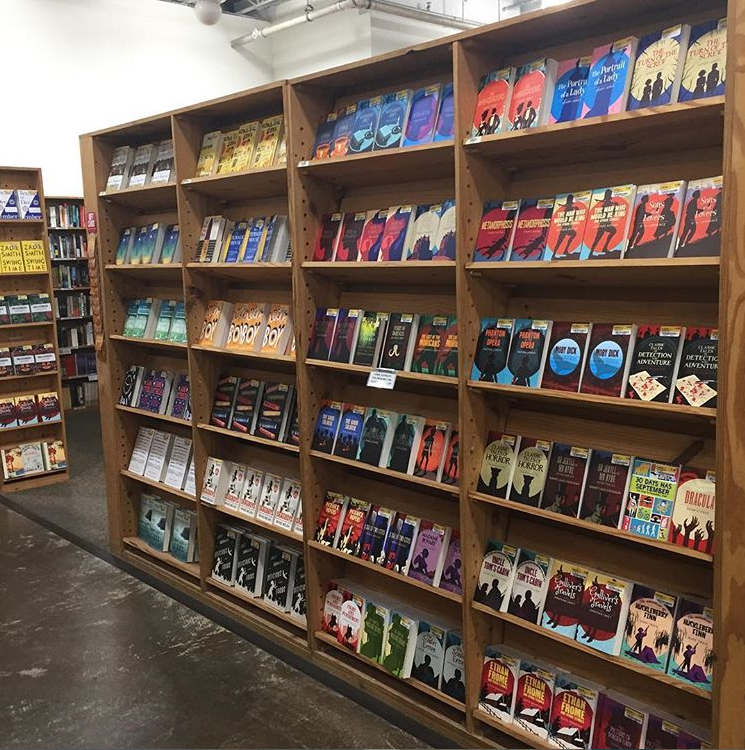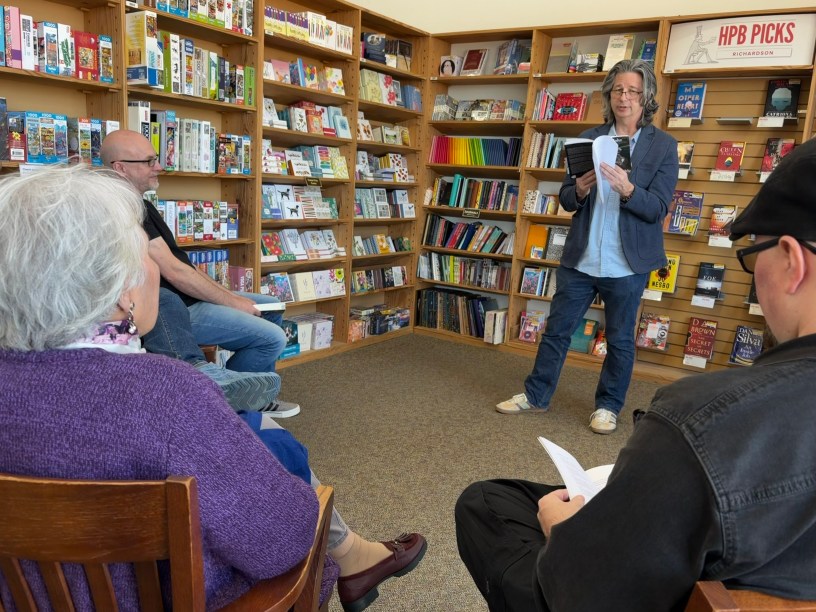
The poet's notebook opened to the blank page.

7 Essential Tips for Young Poets on Finding the Poem


You love poetry. That’s where we all begin – love of a good poem. Now, it’s time to write your own poems. But you hate what you’ve written. Now what?

1. Free Writing

After you’ve picked an interesting starting point for your poem, which can be as simple as the tree in your front yard, start writing. Write the good, write the bad, write what comes into your head. Soon, with practice, you’ll follow the path from something mundane to something interesting. Keep writing. Even after you think you’re done, keep writing. Magic can happen here and often does. It’s a bit of stream of consciousness, it’s a bit of free association, and it’s a bit of triggering the subsconscious. When you do finish, you’re not finished. See tip number seven.

2. Research

Find a topic that interests you and dive into the research. Whales? The violent crime rate? Farming techniques in the middle ages? Take notes. Learn your topic, so that when you do begin writing your poem, you have a feel for what it is you’re exploring. Although I often take copious notes during my research phase, I rarely use all of my research. It’s a jumping off point. It helps me understand the world that I’m writing about. And when I’m writing, I lean in to what I sense is important or interesting or needed in the poem. But doing your research can so often lend a texture to your poetry that you cannot get without it. It’s not essential, but it can make for rich details and bring your audience into a world that they had not yet explored.

3. Observe

So much good poetry centers around intense observation. Whatever it is you’re writing about, strive to really see it, and see it from all angles. Strip away your biases. Open those peepers and take it all in. Empathize. Observe. Write it all down. Then see tip number seven.

4. The Senses

While a poem does not often rest wholly in the physical realm, I believe it must be grounded there. We experience the world through our senses first. Use them. Most good poets are excellent at painting a strong visual image. But you can go beyond that with descriptions of taste, touch, sound and scent. Scent is such a powerful emotional tool. We connect to scent in subconcious ways that can trigger all kinds of feelings. Don’t underestimate the power of all five senses in your poem. That’s not to say you need to hit every sense in every poem, but only that you should be aware of your full arsenal of language and connection.

5. Metaphor

Oh the metaphor, sweet, sweet metaphor. Don’t let your poems idle in neutral with a single image. Complicate the idea in your poem, explore it, expand it with metaphor. Consider extending your metaphor across the whole poem, or use multiple metaphors to bring out your image/idea and make it feel more connected to the world at large.

6. Get Weird

Please don’t be normal. Writers with normal sensibilities should write essays or stories. (I kid! Sort of.) But in all seriousness, when you are writing poetry, let your mind and imagination take you to weird places. Make strange, and almost non-sensical, connections. You won’t keep every weird tangeant in your poem. But fortunately, it can all be made wonderful with tip number seven.

7. Edit

Once you’ve let your pen run rampant across the page, let it mellow for a day then return. What feels interesting, moving, powerful? As the poet, you get to establish your own criteria for what you think is important. But do have a yardstick. And then start shaping that poem. Yes, we’re cutting words out. But we’re also looking for opportunities to reshape and add to the poem as well. This is not to say that there are no great poems that come out fully baked and ready for publishing. But so much of the best poetry out there has been edited and re-edited. Editing allows us to take the fresh eyes of a new day and hone our poem until it shines. Mary Oliver once said, “In my own work, I usually revise through forty or fifty drafts of a poem before I begin to feel content with it.” Ama Codje writes, “Time is the first ingredient of my approach to revision; it allows me to re-see much more clearly than I’m able to immediately after I’ve drafted a poem.”1 And of Anne Sexton, the The New Your Times wrote, “It is instructive to learn, for instance, that at certain periods in her life she revised endlessly, taking a poem through 20 or more drafts, while at other periods she wrote in a kind of white heat, two, three, even four poems a day.”2

As you train your measuring tools for what is good poetry in your writing, you’ll get better and better at knowing when a poem is truly done. Or at least done enough. Walt Whitman famously never stopped editing Leaves of Grass. No pressure.

1https://www.ironhorsereview.com/single-post/7-contemporary-poets-on-revision

2https://www.nytimes.com/1981/10/18/books/the-rise-and-fall-of-a-poet.html

John Corbett's character Chris Stevens reading literature on Northern Exposure

The Literary Allusions in Northern Exposure

Recently, I have been rewatching Northern Exposure. Yes, this TV series is over 30 years old, but the series has a particular nostalgia for me. Often while watching the show with my mother, one of the characters, often John Corbett’s Chris Stevens, would make a literary reference. And I would point to my corner bookshelves and say, “Yeah, I’ve got that book over there.” It’s like they had my home library for reference. It has been a little uncanny. Which of course, endeared me to the series even more. I by no means have a comprehensive library, but whoever was writing for the show had gravitated toward many of the same classics I had. I detect the machinations of a cultural zeitgeist at work.

The one reference that inspired me to write this blog was to a work I had not read, “Remembrance of Things Past” by Marcel Proust. It was such a beautiful passage though, I felt compelled to pick up the novel (the first in a series). Corbett’s DJ character read this one on the air:

When from a long distant past nothing persists, after the people are dead, after things are broken and scattered, still alone, more persistent, more faithful, the smell and taste of things remain poised a long, long time like souls, ready to remind us, waiting, hoping for their moment amid the ruins of all the rest, and bear unfaltering in the tiny and almost impalpable drop of their essence the vast structure of recollection.

Certainly, speech patterns change over time, but I found this prose so lyrical as to be magical. I found myself wondering if writing like this gets weeded out these days as too alienating to readers, or if it simply isn’t written.

The Chris Stevens character has a meandering, philosophical and well-educated style of pontification, which he delivers mostly over the radio, but also to fellow members of the town as a kind of defacto psychiatrist. I delight in the intellectual inquisitive nature of the dialogue that I haven’t found anywhere else.

Here’s a short list of literary references I know of made on the show that occupy space on my library shelves:

Zen and the Art of Motorcycle Maintenance, Robert M. Pirsig

In Dreams Begin Responsibility, Delmore Schwartz

Plays of William Shakespeare (The Tempest)

Leaves of Grass/Song of Myself, Walt Whitman

On Walden, Henry David Thoreau

The Stranger, Albert Camus

The Call of the Wild, Jack London

The Power of Myth + The Hero With a Thousand Faces, Joseph Campbell

The Raven, Edgar Allan Poe

Other authors mentioned include: Fyodor Dostoevsky, Franz Kafka, Carl G. Jung, William Wordsworth, Edna St. Vincent Millay, Friedrich Nietzsche, Herman Melville and Emily Dickinson.

What fun!

Why Poetry Matters

Recently a friend of mine who teaches high school English asked me if I had anything to say to high school freshmen about why poetry matters. Well, wow. That’s the $100 question, isn’t it? I had to have a think about that one.

I do think it matters, of course, but my guess is that a lot of people never look at another poem after leaving high school. Maybe I’m wrong. I hope I’m wrong. According to a 2022 NEA study those U.S. adults who read one or more books in a year slipped from 55% in 2012 to 49% in 2022. That same study, however, showed that the percentage of U.S. adults reading poetry actually increased to 9% in 2022 from 7% in 2012.

Here’s Ethan Hawke’s optimistic view of why poetry matters. A beautiful sentiment, elegantly said.

But for me, first and foremost, I just really, really like poetry. I have often said (and had no one agree with me) that poetry is the highest art form. It incorporates language, intellect, emotion, various aesthetics, rhythm, the body. There’s so many worthwhile things going on in a well-crafted poem.

I’m sure you know poetry most likely predates written language, as it was passed down through oral tradition, from generation to generation. Not only did it preserve cultures, but it strengthened communities. Many of the techniques we still use like rhyme and meter made poetry easier to remember.

I believe there’s something at work in the body when we read and respond to poetry. It can be a very physical experience (like music, with which it has a lot of shared qualities). But at the same time, we are stimulating the mind, challenging assumptions, and opening up new ideas.

Some of modern poetry can definitely be challenging, and it scares people away. I blame that on how the critics first responded to T.S. Eliot’s work, which I think was intentionally obfuscating (while not maliciously so, of course). But there is plenty of modern poetry being written that is accessible by the non-initiated (real poetry, I mean, and not Instagram poetry).

Students should know that when they find a poem that they like, they should always read it aloud. It’s the best way to experience poetry. You want to feel the poem in the mouth and in the sound in the air. You want to hear the poem in its intended rhythms and sounds. Or you can lose much of the art that makes a particular poem work.

Students should also know it’s okay not to fully understand the poem. That’s right! Poems are meant to be experienced. One should ask themselves first how a poem makes them feel, not what it means. I listen to so many rock songs that lift my spirits, but for which I cannot decipher all of the lyrics.

So let the poem wash over you. Poetry is usually a quiet affair, read in a quiet space in a quiet voice, allowing the mind and body to quieten and simply welcome in the poem. Doesn’t that slowing down and experiencing good art seem worthwhile?

Poetry matters in the way that any good art can matter. It can move you or change you or illuminate a truth or an understanding – in a way that other things can’t fully reach or in places to which they cannot fully connect. Or it can simply offer the reader a pleasant movement in an otherwise hectic world.

Science-Fiction Books Available in 2025 and 2026 (Hopefully)

I have decided to attempt to return to my science-fiction work, while maintaining my focus on poetry. For the past five years, I have concentrated almost exclusively on poetry. While I have enjoyed this journey and have no plan to slow down writing and publishing poetry, I have found the strong desire to work and publish in fiction to be almost equally as strong.

So here’s a list of already written books that I am actively re-editing and hope to release in the coming year and a half. A bit ambitious, perhaps, but we have to start somewhere, don’t we? Timing will depend on both how the editing goes and securing the right art work (the two most time-consuming parts of the process). I’m hoping by putting this out there, I’ll feel obligated to persist with such an aggressive schedule.

  1. Steampunk novel set in the American Old West (with a fun science-fiction twist).
  2. Steampunk fantasy novel set in its own world (less steampunk than the previous novel but heavy on the magic).
  3. Book of science-fiction short stories.
  4. Science-fiction chapter book (for grade-school kids).
  5. Chapter book (for grade-school kids). This one is kind of a sports theme but not in the traditional sense.

That’s a lot right? I don’t know about you, but I’m excited! This work represents almost a decade of work.

By getting these books out there into the world, I will then free my fiction-focused time up to focus on my already started (and stopped) projects that include a science-fiction space novel, as well as the third Spit Mechs chapter book.

I have a few poetry book manuscripts that I have been shopping around with publishers (one ever-changing book and two chapbooks). So I’m hoping these will land soon. Fingers crossed, everyone!

If you want to get notified when any of these books launch, the best way is to join my email subscription. (I never spam. To-date, I’ve only sent emails for book launches and events I attend.)

But you can also follow me on my social media handles:

IG: cbuchly

X: WordsAreMessy

FB: CorbettBuchly

A Quick Guide to Useful Books for the Active Poet

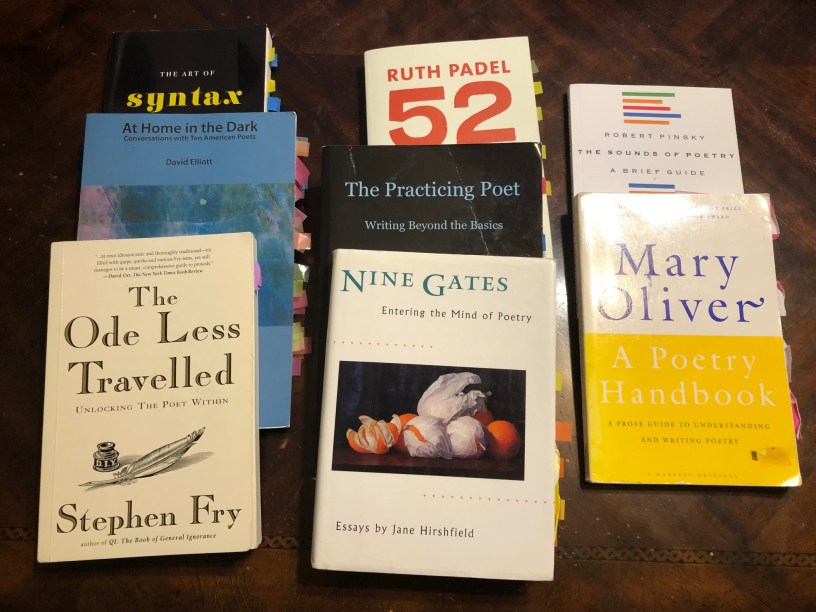
Having read several books recently on the writing of poetry, I thought it would be good to provide a quick guide on some of those I found the most useful.

A Poetry Handbook (by Mary Oliver) – This is a great overview of poetry writing. I rarely reread books, but I’ve reread portions of this one.

The Ode Less Travelled (by Stephen Fry) – The best book I’ve read on forms. It’s so well-written. Fry, of course, is a professional actor, but as he refers to himself, an amateur poet. Doesn’t matter. His writing is spot-on and highly practical.

Nine Gates (by Jane Hirshfield)  – How to describe this book? These nine essays cover a lot of ground in the poetry craft, but what Hirshfield does best is to deal with some of the more mystical questions in poetry.

The Sounds of Poetry (by Robert Pinsky) – What it sounds like. Really helps you understand how sound goes to work in a poem. Mary Oliver’s book touches on this too.

The Art of Syntax (by Elllen Bryant Voigt) – This deals specifically with the tension between a poem’s syntax and its form. An illuminating perspective that I don’t think all poets consider in their writing.

The Practicing Poet (by Diane Lockward) – To describe this book as a series of prompts with examples and discussion doesn’t seem to do it justice. I worked through the entire book over the course of a year and found it very fruitful for my own writing. My published poem “Coiled Drum Bides in Stillness” (Interpreter’s House, 2020) emerged from one of these prompts.

At Home in the Dark (by David Elliott) – Elliott interviews 10 prominent poets. A terrific read on the topics dear to poets. I want to find more books like this.

52 Ways of Look at a Poem (by Ruth Padel) – The introduction to this book is a top-notch and insightful summation of modern poetry. The book then takes you through 52 poems and dissects them. This is a really good book for understanding how successful poems work.

Enjoy!

Writing and Community

For years, I’ve done all of my creative writing in isolation. None of my close friends have been writers. I’ve rarely bounced ideas off of other creative writers. I’ve certainly never collaborated with anyone. On a few occasions, I’ve found myself in a fiction writing critique group, but these have never lasted for some reason (and I haven’t always got the benefit out of them that I had expected to get). It has been like working in a vacuum.

But this year, I have made more of an effort to attend a poetry workshop group in the area. The poets in this group range in expertise, and there are certainly some good minds that challenge me and my writing. But I’ve also begun to reap the benefit of just being around fellow writers who are living many of the same challenges, struggles and joys as I do.

I’ve gained insight into the kinds of journals these poets are getting published in, how they are getting their books published, and which conferences they go to and the benefits they reap from those experiences. Although many of these elements seem small, they add up to a lot, in my estimation.

Whatever your passion might be, I’ve come to realize that being around others with your same passion is a healthy, important and possibly even a vital experience if you can get it.

Do You Have Something to Say?

A friend of mine recently asked me a seemingly small question. I was telling her about all of my creative writing projects (my children’s books, novels, short stories and poems), and she asked, in an intrigued tone, “So you feel like you have something to say?”

I could answer that question by rattling off all the philosophical topics I love to chatter about anytime I’m sitting across someone with nothing but coffee between us. And I could easily write a non-fiction book on just those things.

But I don’t think that’s really answering the question (for one thing, I’m not writing that non-fiction book). And I don’t think it’s such a small question after all. Certainly everyone has opinions, and at least a modicum of a unique perspective. Each of us, I believe, has something to share with our fellow humans. But do we feel that something is valuable enough to charge others’ money for it?

Part of the answer lies heavily with how we share our piece. Because that’s the art of it, isn’t it? Are we a good craftsman? Do we weave a compelling tale, or use poetic language?

But also, is our perspective well-informed? Well thought-out? Does it share a perspective sufficiently unique as to provide something new or powerful or educational?

I can only say I hope so. And I suppose that would be the honest answer, in one form or another, of most artists. We create because we are drawn to do it. I write stories and poems, because I’m feel compelled to do so and because I feel immense joy in the process.

But are the works that result things of value? It is the collision of art and audience that starts to answer that question. Even then, we are left with the question: Did the right art find the right audience?

Pens, Keyboards & Typewriters: How the Physicality of Creative Writing Affects the Psychological

When it comes to creative writing it matters how we write.

Most modern writers, it would seem, knock their drafts out tapping onto a computer keyboard, almost at the speed of thought. The improved keyboards of today’s machines make this experience nearly soundless. There is a swift conveyance of thought to screen that seems to be almost simultaneous for some. The convenience and speed of computer input makes it seem like a no-brainer. I do most of my writing this way. But writing hasn’t always been this way.

When I get stuck, I reach for my notebook. There is something about the process of putting ink on paper that changes the way we think. Some psychologists have suggested there might be a link between using two hands (a keyboard) and the one needed when writing longhand.

But that can’t be the whole story. There is a spatial element involved when writing by hand as well. I use pen writing most often when I’m working something out creatively, perhaps it’s a plot or a character arc. I often don’t just write straight across the page, line after line. I may write a note in the margin, and then I’ll draw a line from that connecting it to another thought on the other side of the page. There’s a kinetic energy to making work this way.

There have been times where I yearn to work on bigger and bigger pieces of paper. Someday, I plan to turn one whole wall of my study into a whiteboard so that I can map out my next labyrinthine novel plot. On second thought, perhaps I should turn the floor into one big rolling butcher sheet (paper is always better).

In Lee Rourke’s article in the Guardian on this subject, he quotes writer Alex Preston: “…watching the imprint of pen on page reminds us that writing is a craft. If everything is done on keyboards and fibre-optic wires, we may as well be writing shopping lists or investment reports.”1

Neil Gaiman has spoken publicly at length about his fondness for writing with a fountain pen (because, of course, Gaiman does). As he told the BBC, “I found myself enjoying writing more slowly and liked the way I had to think through sentences differently. I discovered I loved the fact that handwriting forces you to do a second draft, rather than just tidying up and deleting bits on a computer. I also discovered I enjoy the tactile buzz of the ritual involved in filling the pens with ink.”2

I also really like what Jon McGregor said (also from Lee Rourke’s article): “An idea or phrase can be grabbed and worked at while it’s fresh. Writing on the page stays on the page, with its scribbles and rewrites and long arrows suggesting a sentence or paragraph be moved, and can be looked over and reconsidered. Writing on the screen is far more ephemeral – a sentence deleted can’t be reconsidered.”1

Exactly! When we write creatively, the subconscious is telling us something. Even though those first words on the page may not be the best, they are important, critical even. Even if you’ve scratched through them, they still exist on paper, hinting at something else, some deeper force at work.

Other writers favor the pencil. And some still, the typewriter. Although I own a few manual typewriters (how they do warm the cockles of my heart), I’ve not really tried seriously writing on them. But poet and professor James Ragan once told me that he wrote all of his poems on the typewriter. There’s certainly a physicality involved with working on a manual typewriter that’s non-existent with a computer keyboard. You have to work at it. There is a physical exercise to getting something out of your head, with the body is engaged, that’s not really present in any other method of writing. Chiseling at a stone tablet, perhaps?

Different words and ideas are possible when you write in a college-ruled notebook versus writing on an unlined page, or on a napkin even. Are you writing with a gel ink pen or a ball point pen? All of these tangible factors affect how your hand moves, the energy of the stroke, the movement of the eye, the mood of the writer even.

I like to imagine the muscles in the hand directly connected by nerves to the brain, and at least some of those links are to the creative centers of the mind. By scratching the page, we jerk the strings of the imagination puppet, the strands that weave through our subconscious.


1 https://www.theguardian.com/books/2011/nov/03/creative-writing-better-pen-longhand

2 http://www.bbc.com/news/magazine-18071830

FreeWrite Combines Electronic Advantage With Old World, Distraction-Free Simplicity

I’ve been following this interesting product called the FreeWrite since they put it up on Kickstarter. In a nutshell, the FreeWrite is a distraction-free writing tool. Astrohaus, the company that makes the FreeWrite, ran a sweepstakes over the holidays. And I actually won the sweepstakes. No really. Out of over 12,000 entries, they selected my name. So needless to say, I was excited to try out this innovative piece of hardware.

They managed to ship the machine to me in under a week. I received it just after Christmas. The FreeWrite looks a bit like those old word processors that were on the market just before personal computers became popular. I had a Smith Corona version in college for a few years. But it’s so much more (and less).

This machine uses an eInk screen to show your content. It uses pleasing mechanical-style keys for input and has very little in the way of interface other than the basic keyboard layout. While it does connect to wireless Internet, it’s only purpose for doing so is to upload what you’re writing to a file folder in the cloud (such as DropBox). This tool is only for writing. No editing. You can’t even cursor backward in your text. You just write. You don’t check Facebook, or your stocks, or watch YouTube. You just write.

I’ve already knocked out half a short story on the FreeWrite, and I have to say, I enjoyed the experience. It’s a little strange not being able to go back in your text, so that will take a little getting used to. But I’ve developed a notation, as such when I think of something to add, I just put it in brackets. Later, when editing, I’ll know to grab those added bits and re-insert them elsewhere.

But seriously, I think the power of free-flowing writing with no real distractions, writing that is miraculously saved elsewhere the instant you type it – I don’t think that magic can be underestimated.

Wired calls it “a blank piece of e-paper.” And that’s exactly it. Such an elegant description, so apt, and there is great power in that simple idea.

I’ve read a few reviews of the FreeWrite online that don’t seem to get what it is. Look, if you have no need for a “distraction-free writing tool,” that’s fine. It’s a niche need. But just because I still have both legs doesn’t mean I’m going to start writing scathing reviews of every prosthetic leg product I can find.

In all fairness to struggling writers out there, the current price tag might be considered high. And I was oh-so-fortunate enough to get mine for free (so grateful, this is me being grateful). Clearly, the cost per machine is driven by the FreeWrite’s high-quality materials (aluminum body, eInk screen and Cherry MX keyboard), which I definitely appreciate. But that aside, I wholly recommend the FreeWrite, and I think there’s hope that if the FreeWrite catches on within the writer community – and why wouldn’t it – that price could come down some in the future.

On its website, Astrohaus claims the FreeWrite will double your hourly word count. I can’t help but believe it.

Before I Write the Novel: 16 Ways I Prepare

Image

As I began working on my current steampunk novel, I took notice of how much work I do in preparation before actually writing any prose. I find it makes the writing go much more smoothly. Primarily, I have fewer issues to mentally juggle in each scene as I’ve already done much of that thinking in the prep work. I can concentrate more on the emotion, the language and the details.

Although I believe every writer has a different process, I thought mine might provide some value to beginning writesr. So without further ado, here’s my list of preparation materials for my current novel:

  1. Plot Post-Its: After a great deal of discovery writing, I try to first nail the plot down by writing plot points on post-its and arranging them on a blank wall or door.
  2. Plot Outline: Using the post-its as a guide, I create the master outline. I spend a great deal of time injecting this outline with all the nuances of needed story (foreshadowing, exposition, inner conflicts, etc.)
  3. Plot High Points: I also find it useful to condense the outline down into a much shorter set of plot high points.
  4. Plot Chart: I create a spreadsheet from the plot high points and created columns for each major character so I can visualize how they were woven in and out of the plot.
  5. Character Bios: I explore primary characters, as far as their past, strengths, weaknesses and appearance.
  6. Research: For this novel, this consisted primarily of research into mechanical machines, various apparatus and specific scientific issues. I keep a Word document with all of these relevant particulars.
  7. Names: Names are critical to developing characters and places. I try to generate every relevant name in the story (knowing there will be more). I also try to group names by (fictitious) cultural influences.
  8. Themes: Here I explore the themes of the novel. This is used to modify the plot outline where necessary.
  9. Elements of Suspense: In this document, I analyze the plot for opportunities for suspense. I then modify the plot outline accordingly.
  10. Ideas Catalog: Like a small encyclopedia, I detail elements and concepts in the world I have created.
  11. Powers Ideas: In this novel, I created a new kind of magic and so felt I required documentation specifically around that.
  12. Diagram of Powers:  I also felt I needed a visual representation of how magic is used, so I made a rough sketch.
  13. Map of City: Naturally, I drew a map of the primary city.
  14. Map of World: I created another map of the world.
  15. Images (Environments):* I create image folders for various scenes and backdrops. These folders are filled with images I searched for on Google image search.
  16. Dream Cast:* I identify the celebrities I think might best represent my main characters, and save the most relevant images of them in a file folder. These celebrities do not have to be actors.

*Both the ideas for the image file folders and the dream cast were suggested to me by other successful writers.